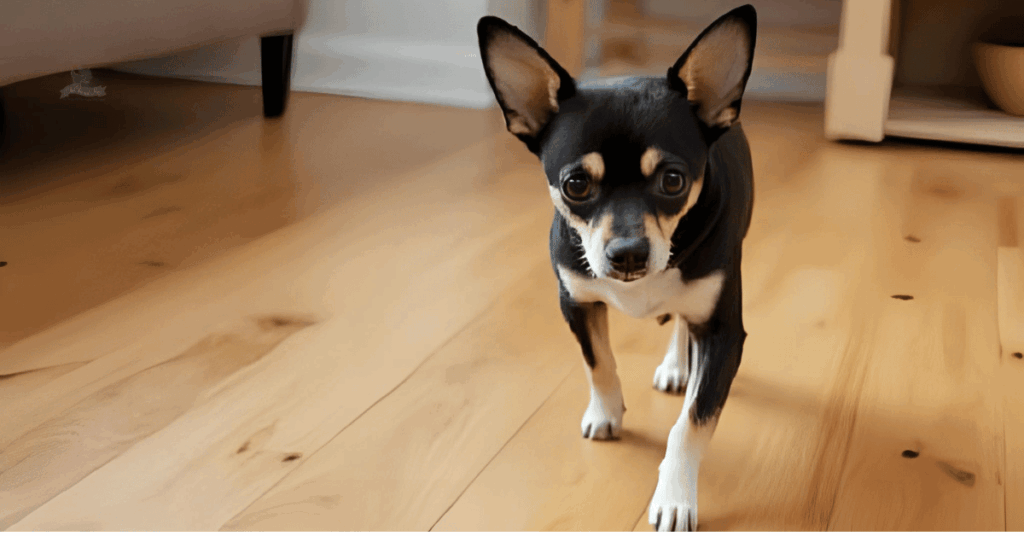
There are many instances when you may need to teach a Chihuahua to walk on hard floors. Maybe you just adopted a Chihuahua who has never had to walk on a hard floor. Perhaps they came from a puppy mill situation or from a home or homes that only had carpeted floors.
In my case, when we still had Chico (3-10-2003 to 7-16-2020) he had never walked on anything but carpeted floors. Then we moved.
my experience with chico walking on hard floors
I think that it is a pretty common Chihuahua problem to be afraid of a different floor surfaces than they have been used to and to be afraid to walk on hard floors. One of my Chihuahuas grew up in our house that had carpet throughout except the kitchen floor. Chico & Pebbles weren’t allowed to be in the kitchen, so it was never a problem because there really was no need therefore I felt no need to address it.
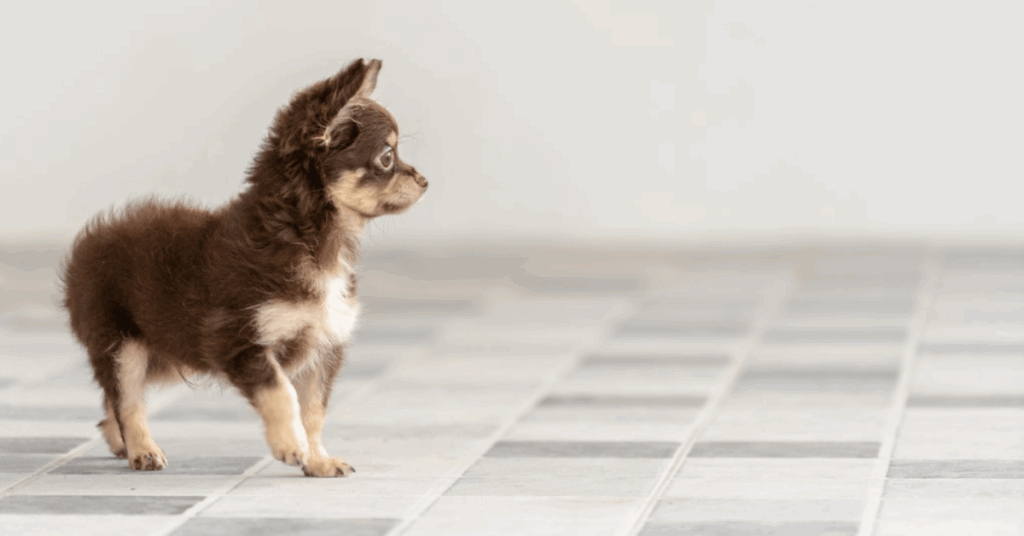
When he was about 10 years old we moved to a bigger house and all the floors are hardwood or linoleum except the bedrooms. Which, by the way is great for cleaning up little accidents or shedding. Not so much for poor Chico. It was the same with Pebbles (8-26-2006 to 8-31-2021), however she was much more curious and adventurous than Chico was.
He would freak out and refuse to walk on them. Now it was definitely a major problem! He had to walk on hardwood floors to get to his food and water bowls and to get to the door to go potty.
the foLLOWING IS A VIDEO I TOOK OF CHICO WHEN WE FIRST MOVED IN
Sorry it’s so dark!
This is why it is so important to expose your dog to all different surfaces. It is best, of course, to do this when he is a puppy because it becomes harder when they are older and have already developed the fear. See my post for more on this subject:
WHY ARE HARD SURFACES SCARY TO A CHIHUAHUA?
For dogs, especially tiny Chihuahuas, walking on hard surfaces like tile, concrete, or hardwood floors for the first time can feel both strange and scary. From their perspective, the ground suddenly feels very different compared to the soft grass, dirt, or carpet they may be used to. Hard surfaces can be cold, slippery, and noisy, and this combination can overwhelm their senses. The sound of their own nails clicking, the echo of each step, and the lack of traction can make them feel like they might slip or fall. Since dogs rely so much on their paws for balance and stability, that sensation of sliding or losing grip can be very unsettling.
Dogs also process the world through smell and touch, and hard surfaces often lack the familiar scents and textures they trust. A slick, sterile floor doesn’t provide the same feedback to their paw pads that natural surfaces do. Imagine stepping onto ice for the first time without shoes — the strange feel underfoot and the loss of control would make most humans cautious and hesitant. For a dog, this can trigger uncertainty, making them lower their body, spread their toes, and move slowly or refuse to walk entirely.
Additionally, many dogs are sensitive to how their environment changes sound. Hard surfaces can amplify every movement, and the echo of their nails or even a dropped object can be startling. This heightened sense of vulnerability — combined with the new, slick texture — can make them feel exposed and anxious. Over time, with patience, encouragement, and positive reinforcement, most dogs learn that these surfaces are safe, but from their point of view, that first experience can be a big, scary challenge.
how can you help your chihuahua to walk on hard floors confidently?
Helping a dog learn to walk confidently on hard floors takes patience, gradual exposure, and a little creativity. From their perspective, slippery or noisy floors feel unsafe — so your goal is to build trust, give them traction, and create positive associations.
- Start Small & Safe
Begin in a quiet, low-traffic area with just a small patch of the hard floor visible. Place rugs or yoga mats down to create a “safe runway” they can use to move across the space without slipping. Gradually remove the mats one at a time as they get more confident, so they slowly adjust to having their paws on the bare surface.
2. Use Treats & Encouragement
Motivation is key. Toss high-value treats (or use a favorite toy) just a few inches onto the floor to encourage them to take small steps. Praise warmly when they do. This teaches them that touching the floor leads to good things. Keep sessions short, positive, and frequent — you want to end on a success, not when they’re scared.
3. Improve Their Grip
Sometimes the fear is purely about slipping. If your dog’s nails are long, trim them — long nails reduce paw traction and make clicking sounds louder. You can also try dog grip socks or paw wax (like Musher’s Secret) to give them better traction and boost their confidence until they adjust.
4. Make it Fun
Play games on the hard floor once they’re a little braver — gentle tug, hide-and-seek, or even a snuffle mat placed on the floor. When movement becomes associated with fun rather than fear, their anxiety will fade.
5. Be Patient
Never force or drag them across the floor — that can backfire and make the fear worse. Some dogs take days to adjust, others weeks. Gentle repetition and positive experiences are what turn the scary floor into just another part of their world.